
Inkster City Directory Collections
The documented historical shelf for Inkster begins at Henry Ford Centennial Library. The Dearborn Genealogical Society identifies both Polk and Bresser volumes there, making the collection more concrete than an undated online directory claim. Polk provides name-led annual snapshots. Bresser adds a reverse, address-led route that is useful when a house number is the starting point. A result still needs an Inkster address check because several Bresser books cover West Wayne, Dearborn, or Downriver rather than one city alone.
| Collection | Years | Where held | Access |
|---|---|---|---|
| Polk Wayne, Garden City, Inkster | 1947, 1951, 1954, 1956, 1958, 1960 | Henry Ford Centennial Library | Printed reference collection, confirm use arrangements |
| Bressers West Wayne County | 1961–1977; 1979–1996 | Henry Ford Centennial Library | Reverse address lookup, with a documented 1978 gap |
| Bressers Dearborn & Downriver | 1953; 1955–1972; 1974–1986; 1988–1990; 1992–1995; 2007–2008 | Henry Ford Centennial Library | Regional reverse lookup, check location and gaps |
| Michigan directories and gazetteers | Late 1800s–20th century, title-specific | Library of Michigan | Catalog, print, microfilm/fiche, or licensed access |
These are documented runs, not a promise of every year. Missing volume years should remain missing in the research log. The Dearborn Genealogical Society directory list is the source for the named Inkster, West Wayne, and Downriver holdings.
Inkster Polk Directory Snapshots
The six documented Polk snapshots are 1947, 1951, 1954, 1956, 1958, and 1960. That spacing matters. A name in 1954 and 1958 supports a dated address trail, but it does not prove where the person was in 1955, 1956, or 1957. Copy the publication year with every entry. Polk conventions may include a surname, spouse or household notation, occupation, street address, an occupancy notation, phone number, and a business entry.
The Library of Michigan city-directory guide describes those Polk conventions and the street-by-street organization that can supplement a surname search.
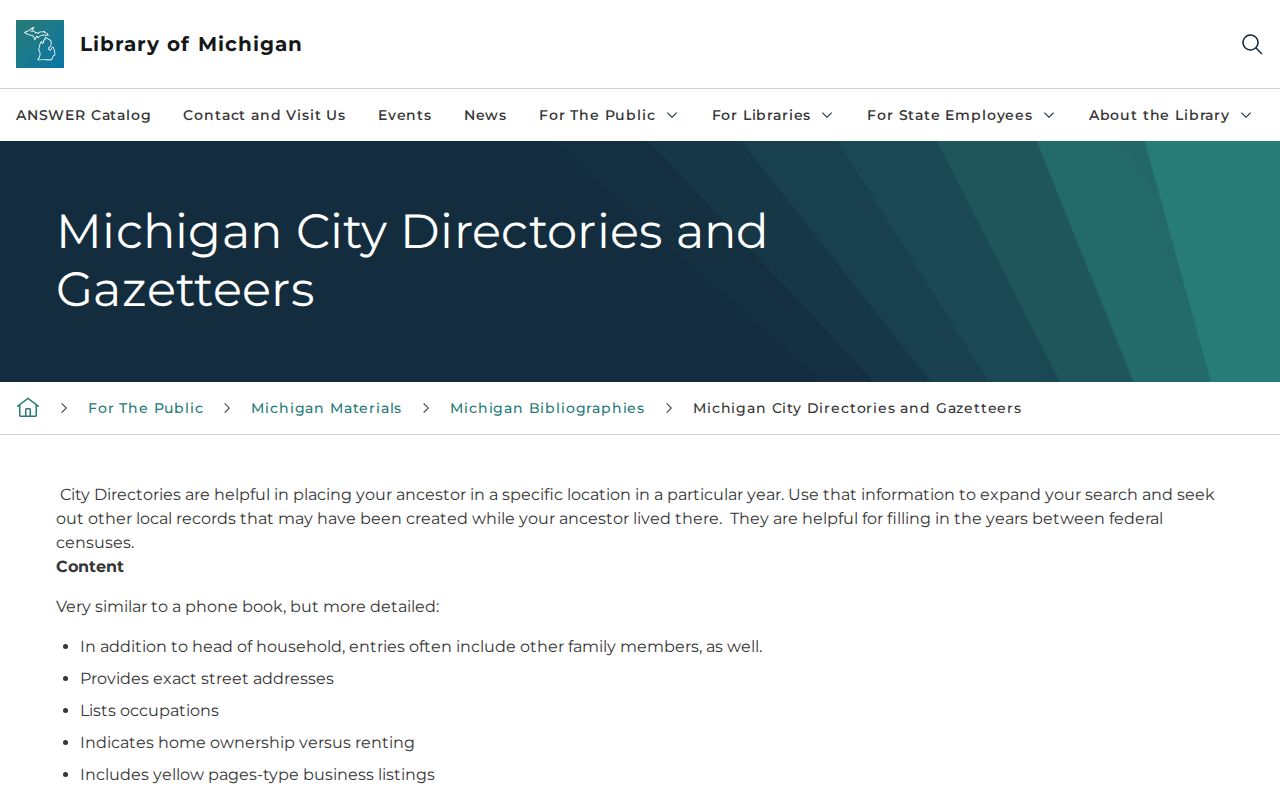
Use the guide to identify the publisher and format first, then inspect the actual volume's own abbreviation key before interpreting a notation.
Note: A directory gives a historical placement, not a current confirmation or a complete list of everyone at an address.
Inkster Bresser Address Volumes
Bresser is the strongest documented route from an address back to a named head of household. Its criss-cross format typically begins with a street and house number, then identifies the head at that address with phone and occupancy clues where printed. The West Wayne County sequence covers 1961 through 1977 and resumes from 1979 through 1996. Dearborn and Downriver volumes add a broader regional route across the listed 1953 through 2008 years, with several gaps.
Search the street alphabetically, then the house number. Compare the result with the main surname section and retain the exact spelling used in the book. A Bresser result can identify the person listed at the address, but it cannot establish every occupant or settle ownership without separate property evidence. Modern address-keyed records belong on the Inkster by street directory route.
Inkster Directory Era Timeline
The documented directory sequence should be read against Inkster's changing jurisdiction. The city-directory era is clearest after World War II, but the place itself had earlier township and post-office labels. The timeline records what is supported by the collection research. It does not identify the first or last Inkster directory ever printed, because that evidence was not located.
| 1947–1960 | Documented Polk Wayne, Garden City, Inkster snapshots appear in 1947, 1951, 1954, 1956, 1958, and 1960. |
|---|---|
| 1961–1996 | Bressers West Wayne County supplies the recorded reverse-directory sequence from 1961–1977 and 1979–1996. |
| 1963–1964 | The post office was renamed Inkster in 1963, and the city incorporated in 1964, important boundaries for catalog and index labels. |
| 2007–2008 | Documented Dearborn & Downriver Bresser volumes reach these years, but they are regional and must be checked for an Inkster address. |
For dates before the city era, search both the modern place name and the predecessor labels. For dates between printed volumes, record the gap rather than inferring a move or a vacant address.
Inkster Catalog and Microfilm Route
The Library of Michigan supplies the broadest backup route when a desired year is absent from the Henry Ford collection. Search its catalog for the city name plus “city directory,” then ask whether the title is in print, microfilm, microfiche, or a licensed database. The research guide directs visitors to the second-floor South alphabetical shelves and the microfilm or fiche room. Staff can also clarify whether a title is available under a different municipality name.
For older household and land context, the Archives of Michigan Wayne County guide identifies probate, estate, assessment, tax, marriage, death, naturalization, military, circuit, land-patent, and survey series. Search by person, township, county, and record type, rather than expecting a directory substitute.
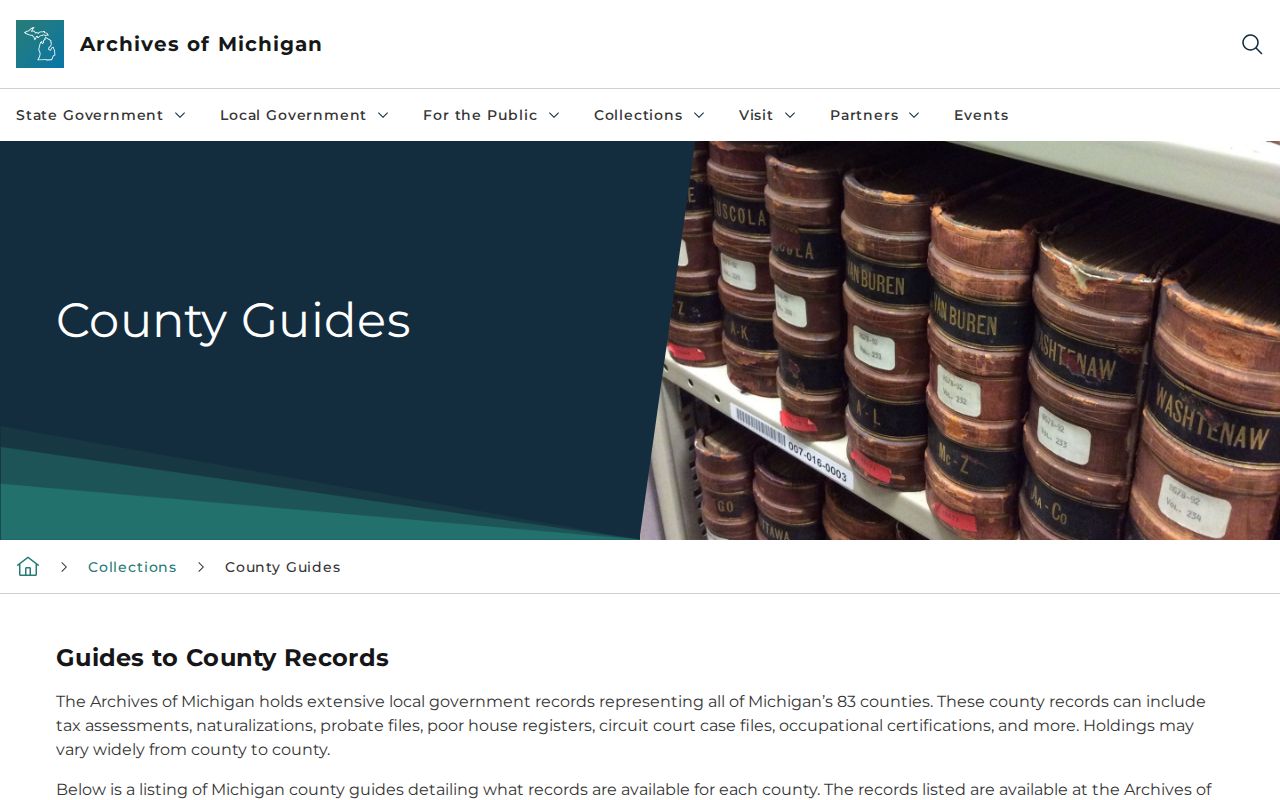
The guide is especially useful when a directory name leads to an estate or township record that predates the familiar Inkster label.
Reading an Inkster City Directory
No true scanned Inkster Polk or Bresser sample entry was captured from an authorized collection. For that reason, an actual household should not be quoted or reconstructed here. The inventory below describes the fields to record from a real volume. Photograph or transcribe the page, title, year, and call number together, since an abbreviation can change from one publisher or edition to another.
| Publisher, title, and year | Identifies the exact source and the date of the placement. |
|---|---|
| Name and relationship notation | Captures the printed surname, given name, spouse or household wording, and initials. |
| Street and number | Records the address exactly as printed, including an abbreviated street form. |
| Phone and occupancy clue | Preserves a phone or occupancy notation when the volume includes one. |
| Occupation or classification | Retains an index field that must be confirmed with name, address, year, and source details. |
- Polk
- A publisher format that commonly organizes entries by surname and may include address, household, business, or ownership clues.
- Bresser
- A directory publisher whose regional criss-cross volumes are valuable for address-first research.
- Criss-cross directory
- The street-order portion of a directory, arranged by street and house number so an address can lead to a listed head.
- Householder index
- An arrangement that identifies the household head at an address; it does not prove every person who stayed there.
- Abbreviation key
- The volume's printed explanation of shorthand. Preserve it before expanding an initial, relationship mark, or address code.
Inkster Library Follow-Up
Leanna Hicks Public Library is a sensible local starting point for an Inkster city directory search, yearbooks, newspaper leads, and neighborhood memory. Its Research resources confirm MyHeritage Library Edition for family-history material and Newspaper Source Plus for articles and transcripts. A Library Network or MeL route may extend access. The public website does not, however, publish a local obituary index, newspaper-microfilm run, city-directory list, or a local-history holding inventory.
The Leanna Hicks Public Library publishes its contact information and research entry point, but a call is still needed to confirm a particular yearbook, clipping file, microfilm title, or staff-assisted house-history option.
That distinction keeps a search grounded: the databases are confirmed, while a claimed local directory or obituary run still needs the library's direct confirmation.
Pre-City Inkster Directory Names
Inkster became a city in 1964. The post office had begun as Moulin Rouge in 1857 and was renamed Inkster in 1963. Earlier land and family material can therefore appear under Dearborn Township, Nankin Township, a postal label, or a neighboring regional directory geography. A failed search under modern Inkster is not proof that the record is absent.
Try the same surname, street, and subdivision terms under Dearborn and Nankin when working before the city era. The Wayne guide lists, among other predecessor-jurisdiction records, Dearborn Township assessment rolls for 1864 and 1871, Dearborn Township deaths for 1897 through 1938, and Dearborn marriages for 1881 through 1883. Keep each publisher and place label in the citation so a regional Bresser entry is not mistaken for a different household.
Tracing Inkster Directory Households
A directory trail is stronger when it is paired with an independent dated household record. Federal census records are public after the National Archives 72-year release interval, and the 1950 census is the newest public federal census at the time of the research. Its Wayne County search route can be used with Inkster village or place terms, while keeping in mind that boundaries and local names changed.
- Choose the closest documented Polk or Bresser year and search the surname section or the criss-cross street section.
- Copy the spelling, address, relationship notation, abbreviation, page number, publisher, and year exactly as printed.
- Check one or two adjacent documented directory years, marking an address or notation change without filling an unprinted year by guesswork.
- Pair the directory date with the 1950 census or an earlier public census, then compare the address, names, ages, and place label.
- Use an obituary, probate series, deed, or city permit file as a follow-up when the trail ends or a household changes.
Disappearance from a city directory may reflect a move, death, editorial lag, an unlisted listing, or a changed jurisdiction label. A census household is also a date-specific snapshot, not a current roster. Use the records together rather than treating either one as final proof.